For most sports fans, attending the FIFA World Cup is likely a once-in-a-lifetime event. For two Temple University School of Sport, Tourism and Hospitality Management (STHM) students, it became something even more meaningful: an opportunity to help bring the world’s biggest sporting event to life.
Bella Quiñones and Stuti Vishwanathan, both members of the class of 2029 and majoring in sport and entertainment management, spent part of their summer volunteering at the FIFA World Cup. Assigned to different host cities and departments, they gained firsthand experience working behind the scenes of two of the world’s most complex sporting events.
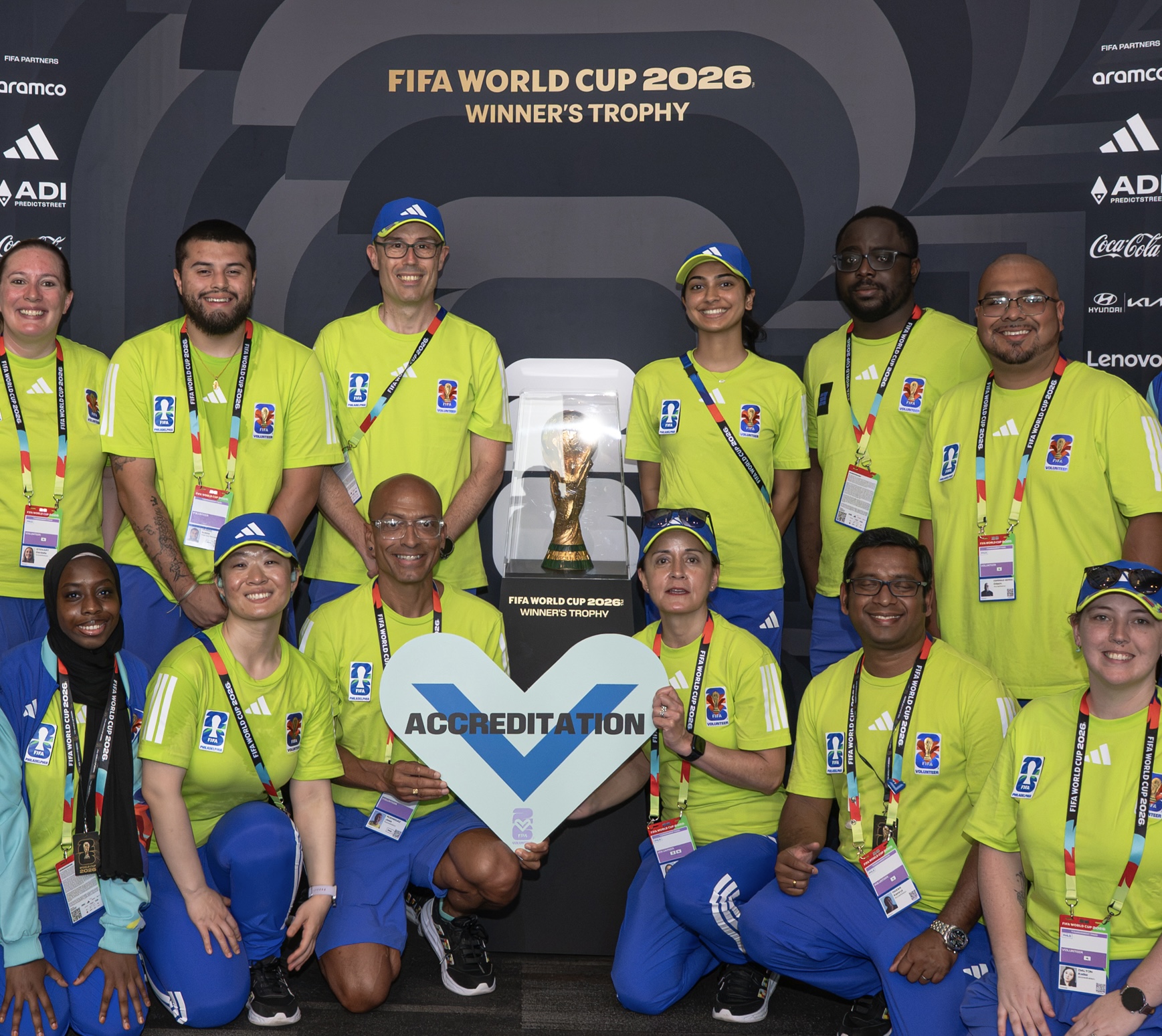
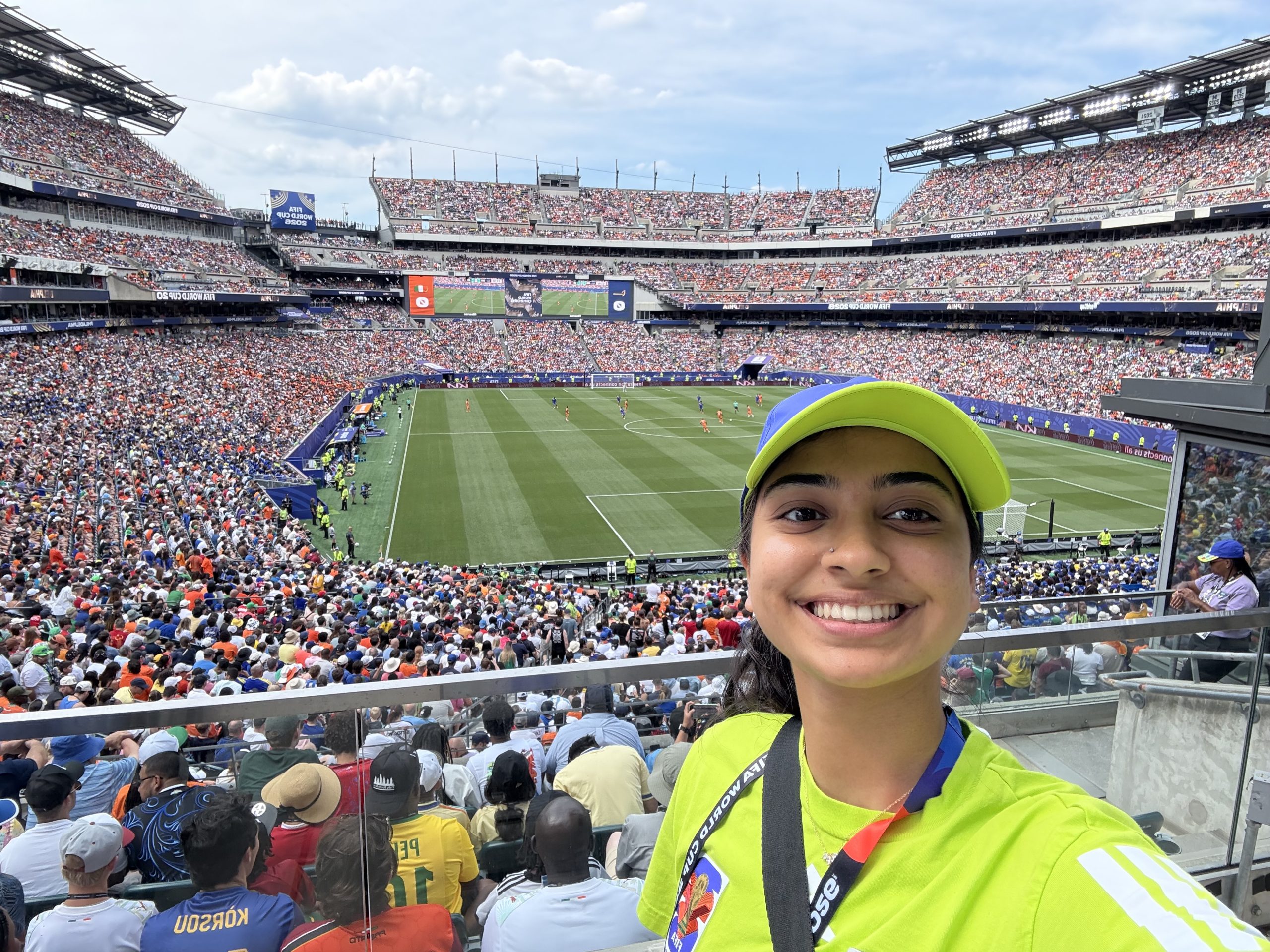
Quiñones served as an access management volunteer at New York New Jersey Stadium, helping manage credentialed access throughout the venue. Vishwanathan volunteered at Philadelphia Stadium, rotating through accreditation, fan operations and ceremonies, giving her a broad perspective on the many moving parts required to stage a World Cup match.
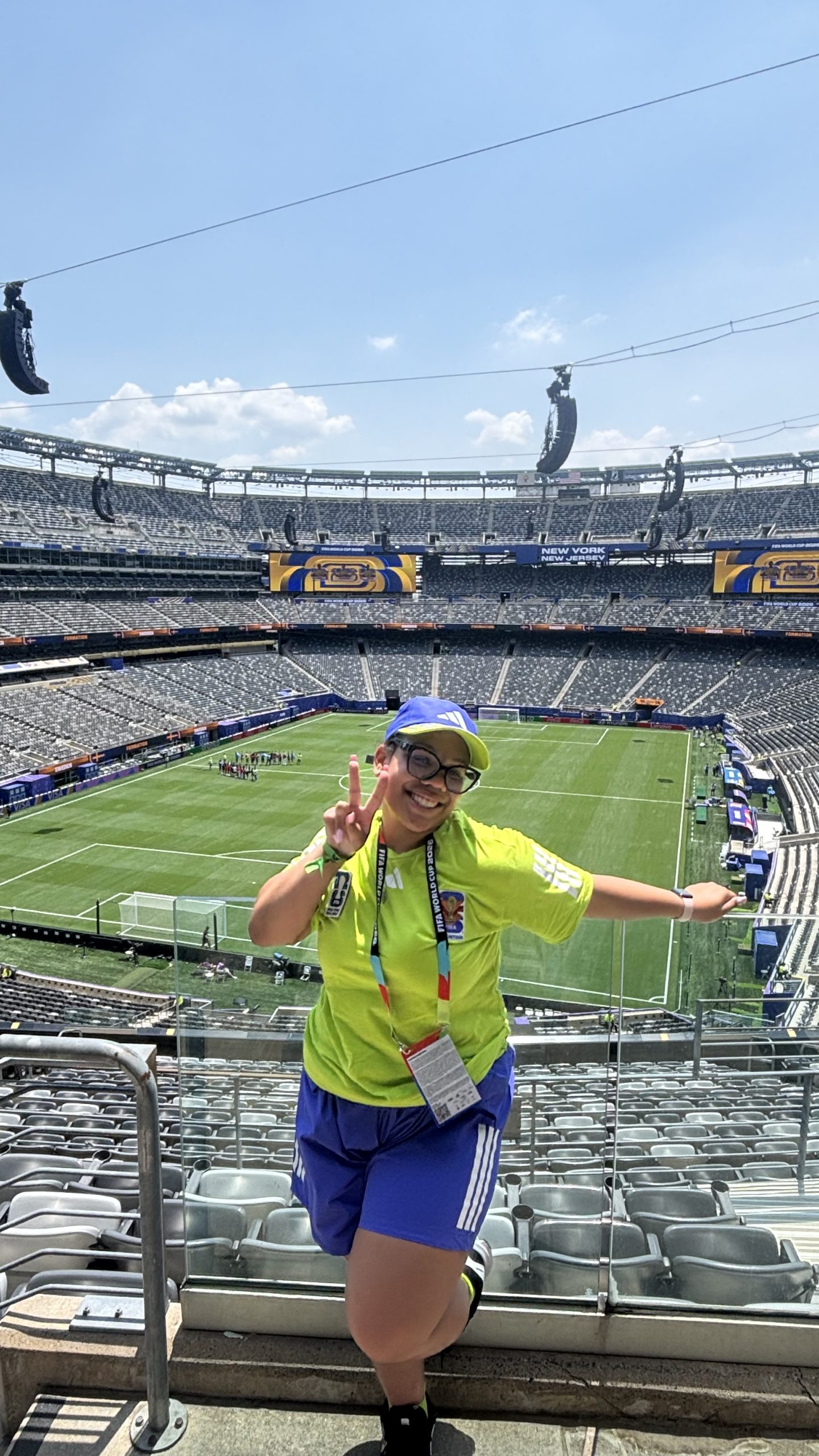
Bella Quiñones was an access management volunteer at New York New Jersey Stadium.
(Photo courtesy of Bella Quiñones)
For both students, the opportunity was about more than volunteering—it was a chance to begin building careers in the sport industry.
“I’ve always wanted to work in sport, so when I saw the opportunity to volunteer at the FIFA World Cup, I knew I had to apply,” said Quiñones. “The fact that it was happening in my home state made it even more meaningful.”
As both an athlete and aspiring sport business professional, Vishwanathan viewed the experience as an opportunity to gain hands-on experience while contributing to the world’s biggest sporting event.
Game day
No two shifts looked the same.
Vishwanathan’s assignments ranged from processing accreditation credentials and welcoming thousands of fans, to stepping onto the field to help execute pre-match ceremonies. Quiñones checked credentials, directed guests and supported security operations throughout the stadium, with one of her favorite assignments taking place near the press box, where she witnessed the extensive coordination happening behind the scenes.
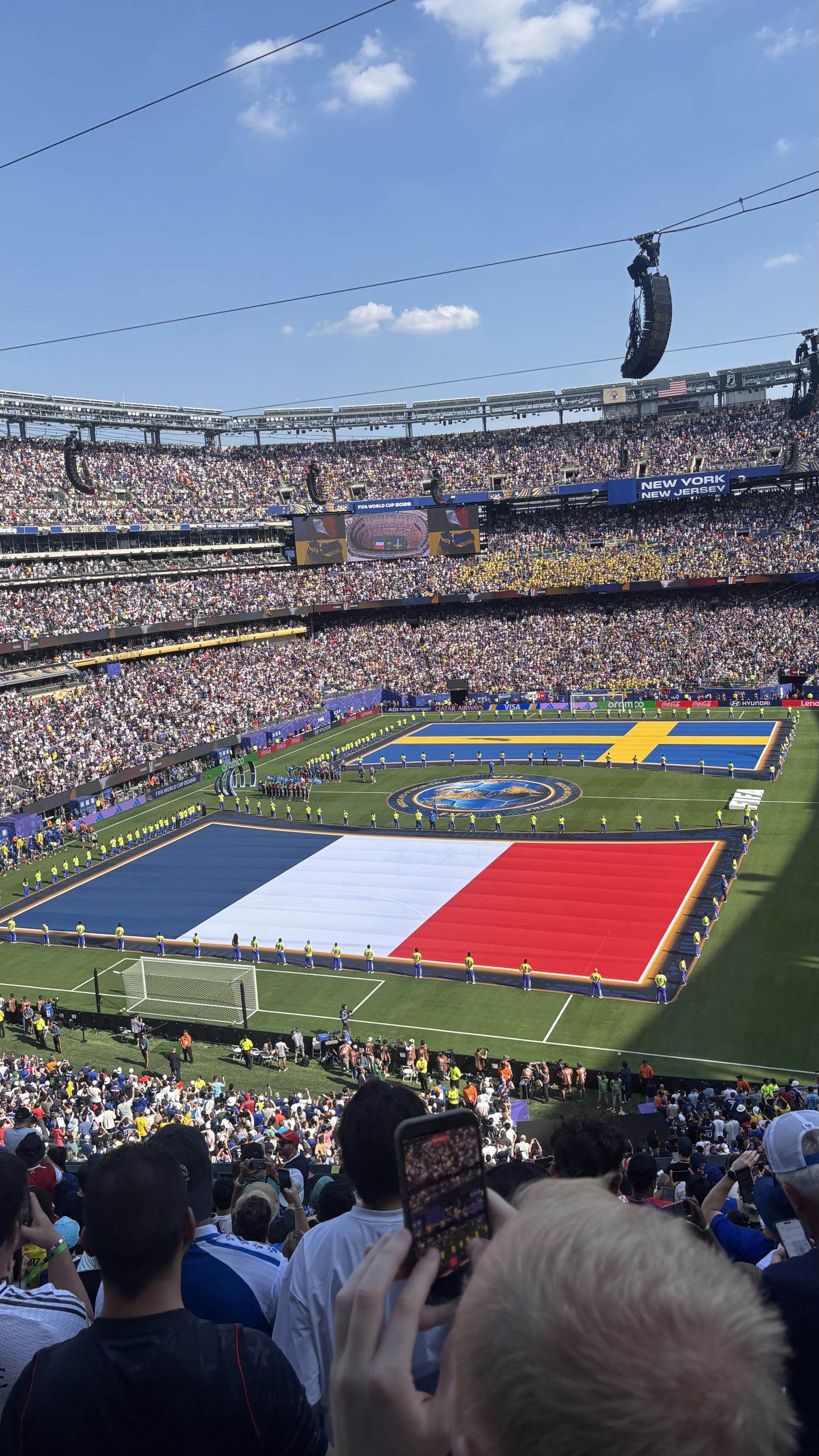
Pre-match ceremonies were a large part of the FIFA World Cup experience at New York New Jersey Stadium.
(Photo courtesy of Bella Quiñones.)
Both students quickly realized that volunteers often become the first point of contact for fans, media and staff.
“Whether it’s directions, transportation, credentials, seating or general questions, people expect volunteers to know everything,” said Quiñones.
Working with thousands of international guests strengthened the students’ communication, problem-solving and teamwork skills while giving them a new appreciation for the scale of the operation.
“I never realized how many people it takes to make one match happen,” Quiñones said. “Sometimes I feel like one tiny part in this huge masterpiece, but that’s what makes it work.”
Each student also experienced a moment when the magnitude of the World Cup truly set in.
For Vishwanathan, the realization came while standing on the field before kickoff.
“Being on the field for the Croatia vs. Ghana pre-match ceremony definitely gave me goosebumps,” she said. “It was surreal to see the whole stadium from that perspective.”
For Quiñones, it came while standing inside the stadium bowl before a match.
“I looked around at all the fans, heard everyone cheering and just stopped for a second,” she said. “I thought, ‘Wow…I’m actually here.’”
Experience in Real Time
Both students agree that opportunities like the FIFA World Cup provide learning experiences that bridge the gap between the classroom and the real world.
Quiñones saw lessons from her Sport and Society and her Foundations of Experience Design courses come to life as she helped shape fans’ experiences through every interaction.
Vishwanathan recognized how personalized details—from fan IDs to commemorative keepsakes— enhanced the overall event and demonstrated the importance of thoughtful experience design.
Despite serving in different cities, both students found themselves inspired by the same thing: the people. Working alongside volunteers from different countries and backgrounds reinforced the power of sport to connect cultures while showing them what it takes to deliver an unforgettable fan experience.
Together, Quiñones and Vishwanathan represent what makes experiential learning at STHM so impactful. By stepping beyond the classroom and onto one of the world’s biggest stages, they didn’t simply witness history—they helped make it happen.
Stuti Vishwanathan and members of the accreditation team with the FIFA World Cup 2026 winner’s trophy.
(Photo courtesy of Stuti Vishwanathan.)