
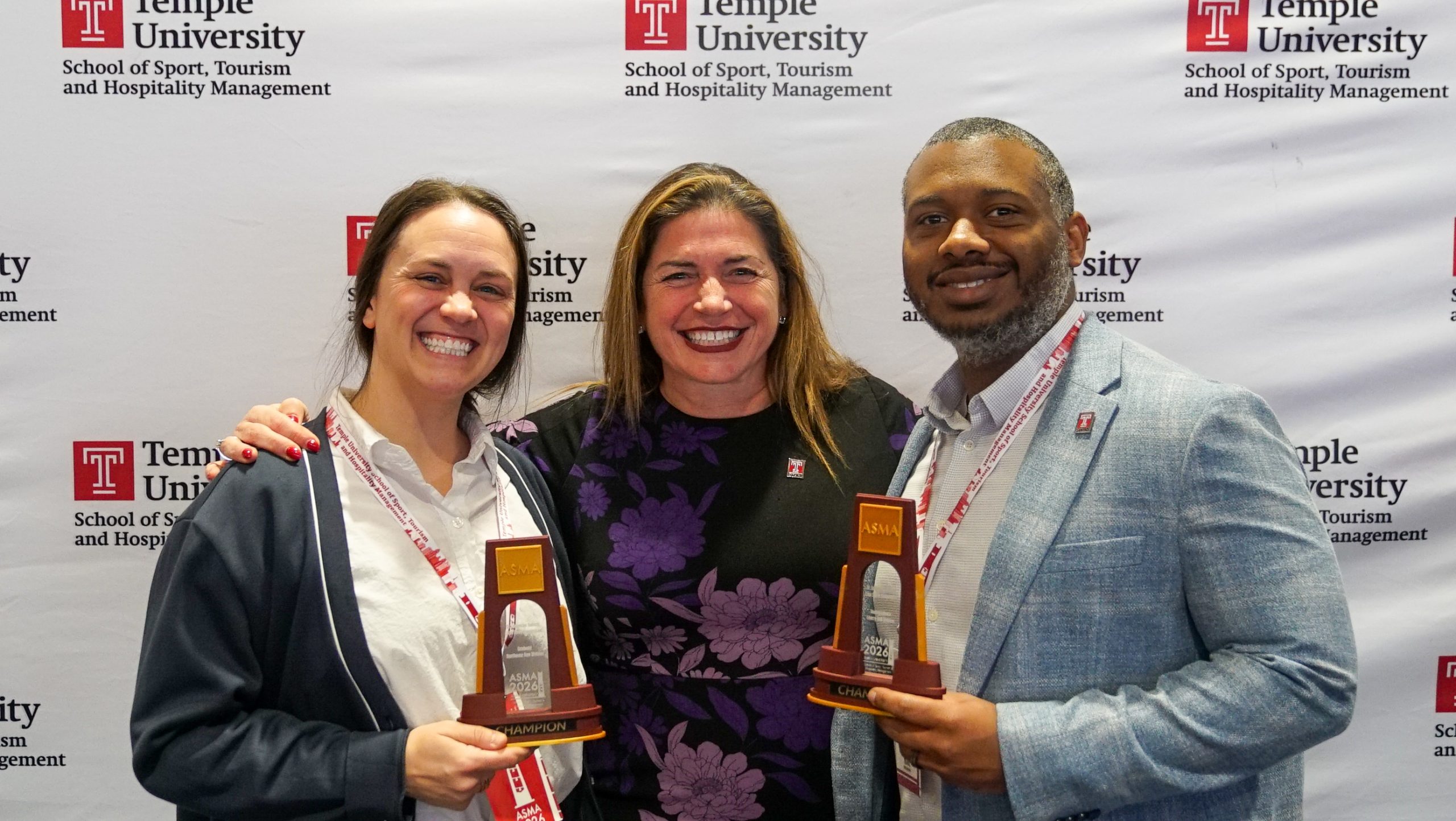
For three days in February, Temple University’s School of Sport, Tourism and Hospitality Management experienced firsthand what it was like to be “on the clock.”
The task of hosting more than 300 students, faculty and industry professionals for the 2026 Applied Sport Management Association (ASMA) Conference was no easy feat, but STHM utilized its strong leadership and tight-knit team to make it a success.
“This was a group effort from many individuals at STHM,” said Elizabeth Taylor, associate professor at STHM. “All the way from planning with faculty and staff beginning last spring to undergraduate and master’s student volunteers assisting throughout the conference, this truly was an ‘all hands-on deck’ operation!”
Building connections
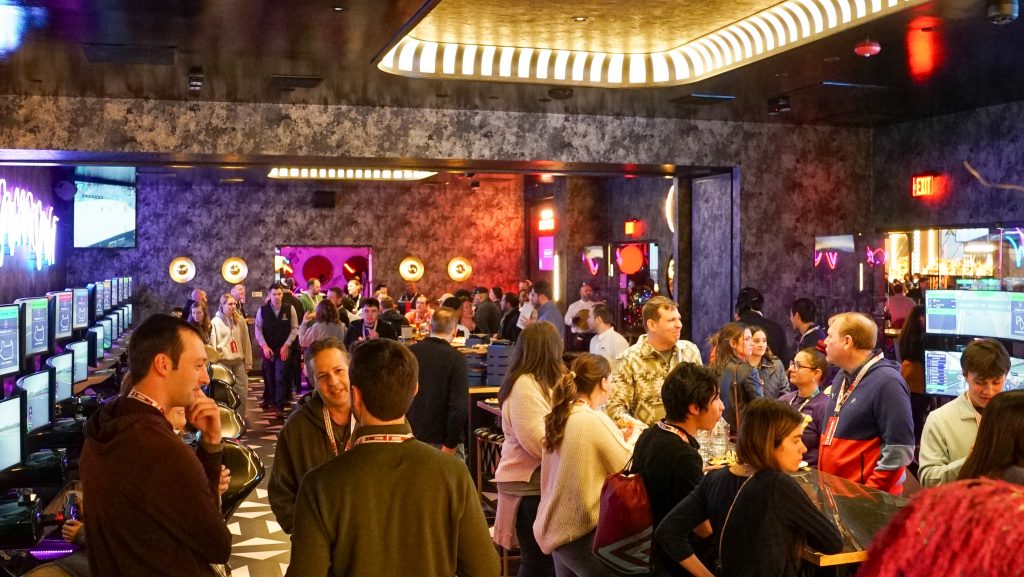
Running from Feb. 11-13, the conference kicked off with an evening social event at F1 Arcade in Center City Philadelphia. The event gave students, faculty, staff and visiting researchers an opportunity to foster new connections and reconnect with familiar faces.
“ASMA has always represented an accessible and welcoming conference; thus, it was critical to maintain those characteristics when planning the 2026 conference,” explained Jonathan Howe, assistant professor at STHM.
“We were strategic in how we designed all aspects of the conference, including the welcome night that was steps from the attendee’s hotel.”
Student research and competition
The conference placed a heavy emphasis on research and was shared through presentations by both attending industry personnel and students alike.
As industry researchers conducted oral presentations, a student research competition showcased the hard work of undergraduate and graduate students.
“My research journey was a long road,” said Ashlyn Casey, class of 2027, a graduate student in her first year studying sport business. “The research I presented at ASMA was the first major research project I had done, and it took me a full year from conception to completion.”
Undergraduate student Cee Rivers, class of 2027, was proud to present her research at the conference.
“After weeks of analyzing nearly 10,000 pieces of fan discourse and developing the project, it meant the world to present ‘Power, Perception, and Performance: The Framing of Black Women in WWE Fan Spaces,’ which is focuses on an area that remains largely underrepresented in research and ended up winning second place,” Rivers said.
“Being able to share those findings and see the work valued by both peers and professionals in the industry was incredibly rewarding.”
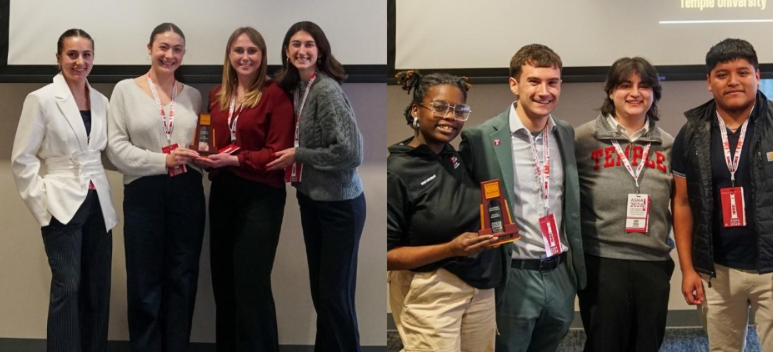
Tied to the conference was a specific case study competition where student teams were tasked to strategically plan and pitch a PGA Tour event at the Cobbs Creek Golf Course in Philadelphia. Students rose to the occasion.
“As graduate students, preparation for this case was overwhelming given time constraints, but our strategy of dividing and conquering allowed us to focus on and bring out our individual specialties, while also making the case easier to comprehend,” said graduate student Sophie Trad, class of 2027, a member on one of the two winning teams.
“Seeing our work come to life continued to ignite the passion we all had for this opportunity, and remembering the grind we went through made the recognition we received feel so much sweeter.”
Industry collaboration, innovation and insight
Panel discussions were an important aspect of the conference’s offerings. Featuring sport industry personnel, sessions added critical dialogue to the event, oftentimes discussing hot topics within sport management research and the industry’s current trends.
Ashley Gardner, STHM assistant professor of instruction, helped coordinate one of the two panels.
“We wanted to ensure that our panels focused on important and relevant conversations that reflected the status of our industry today, and conferences like these serve as a fantastic opportunity to engage in those discussions,” Gardner said.
She also served as lead moderator for a headline panel session that centered on examining the worldwide attention Philadelphia will receive through its 2026 events and celebrations.
“I wanted to ensure we featured top-tier panelists who reflect Philly’s mega event sport culture, and Meg Kane (host city executive, Philadelphia Soccer 2026), Brea Webster-Stanko (deputy executive director, PHL Sports), and Jack Jumper (associate athletic director for external relations, St. Joseph’s University) were incredible,” Gardner added.
“They all agreed to participate right away, and I developed questions that blended scholarship and industry perspectives so both practitioners and scholars could gain valuable insights from the session.”
A lasting impact
As the conference closed, it became clear that the impact of the event would be felt by attendees and students for time to come.
“Our students benefited the most from having access to students and faculty from other universities,” Howe said. “The networking and access this conference provided were amazing professional development opportunities for them.”
Additionally, the various accolades students received during the competitions demonstrated a continued commitment to growth and excellence.
“This is the third year in a row we’ve had a team win their division, highlighting the exceptional effort and dedication they put into their preparation,” Taylor added.
On an institutional level, hosting the conference allowed STHM to show off all facets of the school and its core values to conference attendees and stakeholders. The event provided a means to demonstrate the school’s hospitality and its connection to Philadelphia and the sport industry here.
“It was great to be able to showcase Temple University and Philadelphia to those unfamiliar with campus, as ASMA had previously not held a conference in the Northeast,” Howe said. “Many hear about STHM from a research perspective; however, it was important to show our hospitality in a meaningful manner.”